
Running Commentary 2/2/2026
Hello,
Happy Groundhog’s Day! Reports from various marmots around the country would indicate that we’re in for another couple months of snowy weather here in the US. Certainly I’d expect as much from February and March here where I live, where January’s been the coldest I’ve ever seen. Still, it would seem, according to more reputable meteorologists, that the worst is behind us.
Also, it being February means that we’re approaching that most romantic part of the year — tax season. I’m going to see if I can’t get my various forms prepared next weekend, so I’ll be taking next Monday off from this newsletter.
Anyway...
Reading...
Halcyon Years by Alastair Reynolds
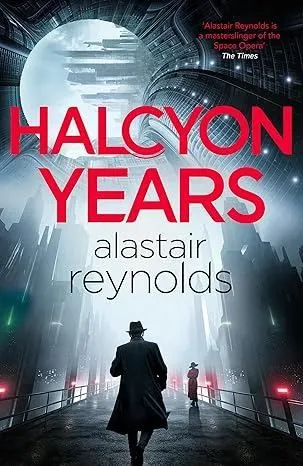
Halcyon Years is, unusually for a book I’ve just read, a recent release from noted Welsh sci-fi writer Alastair Reynolds. It was published in Britain a bit before it was published in the United States, so I had heard of this book, and heard it was good, moreover, before I was actually able to get my hands on it. It is a sort of throwback murder mystery set in the future in outer space, which is also true of Mur Lafferty’s Station Eternity, which I did not much care for. This book I liked more; I actually liked it a lot by the time I was through with it. It’s the kind of thing that could be really good or could be really bad, depending on how it turned out in the end, but I was happy with it in the end.
This book is a really well‑crafted mystery story. It opens with a private investigator in what seems like the mid‑20th century, approached by a mysterious woman with suspicions of murder about a pair of recent deaths. So far, so standard. But then we find that this world of landline phones and film cameras is actually aboard a spaceship, and that the private investigator is Yuri Gagarin, Soviet cosmonaut and first person to travel to space, somehow revived in the future by advanced medicine. As I read this book, I first wondered if there was any point to this; I might have thought the book was just being gimmicky and sloppily referential. But I know Reynolds by reputation, and that reputation is not one for writing hollow, hacked-out mad-libs pastiche. So I read on, and I found that there is reasoning behind the story’s anachronisms, and a deeper explanation for why Yuri Gagarin is living Sam Spade’s life aboard a spaceship. As Yuri investigates the murders, he discovers what the reader begins to suspect: that the world he lives in doesn’t make any sense. Only in solving that greater mystery does he find the truth.
As a mystery story, Halcyon Years plays out pretty well. Even as the grotesque systems unfold, the initial investigations into the deaths of young members of prominent families remain a relevant part of the story the whole way through; the plot doesn’t switch tracks as it might have done. Everything in the book builds toward the conclusion without feeling simply like the steps toward it. The general shape of the climactic reveal can be seen from a distance, but the details still come as a surprise while satisfying the reader’s questions.
Overall, Halcyon Years is a book made up of deftly‑avoided mistakes. Reynolds plays with writing a bad book, throwing together all kinds of indulgent little embellishments and working from one of the most stock of stock storylines but then giving all of that a purpose. This book isn’t some avant‑garde tour de force by any means. The author is having fun, just not at the expense of the reader. We are not made to turn our brains off and enjoy the ride, but rather to consider what we’re reading, even if it’s something we’d usually let fade into the background. 8/10
Spoiler Notes
- One might wonder why only the “growlers” threaten the Halcyon but not the much more delicate deceptive shell that the two families built around it. I figure that if it’s moving forward with the ship, it just presents a thin leading edge to anything it might collide with, and given how fast it and the ship are moving, it’s unlikely anything would catch it from the side.
- One thing Reynolds does leave a bit unclear is how long the Halcyon can go on before running out of resources. Apparently its journey is now many times longer than it was meant to be, though it was also intended that the Halcyon would remain inhabited once they reached the colony system, so who knows. A closed environment like the Halcyon couldn’t remain livable indefinitely, since it’s not being resupplied or even receiving energy from a sun, which is how life on Earth is sustained. I suppose that absent knowing the number of people aboard and assuming a large enough stockpile of supplies that this won’t be an issue for a good while.
Playing...
Warframe
I’ve gone through the rest of the KIM chats and story elements centered around the three XX99 protoframes released in the last update. There’s not a whole lot to say about this; I guess I’m glad that Loid finally got the courage to let Albrecht’s family know he is still alive, but I’m not sure why the strangers from the past were the impetus for that to happen. I’m also not sure why the task of forgiving the Orokin Roathe fell to the Drifter, who has a lot less ugly history with the Orokin Empire than the Operator does. I suppose because these new ’frames are romanceable.
In any case, I continue to be impressed by how the KIM chats brings new characters to life. Roathe was the most lore‑relevant, with his memories of the Old War and of Executor Nitokh likely to play into the story of future updates. But all three told fascinating stories about their pasts. Marie was an interesting exercise in the player having to show not tell a person about what we understand about Albrecht. Lyon was more or less the easiest to go through—you just let him say what he wants to and don’t push him on anything. His story I personally found the least interesting of the three.
Besides that, I’m excited to learn that Warframe will be launching on Android worldwide on February 18th, two weeks from this Wednesday. Super excited to play my main account from my phone.
Bird of the Week
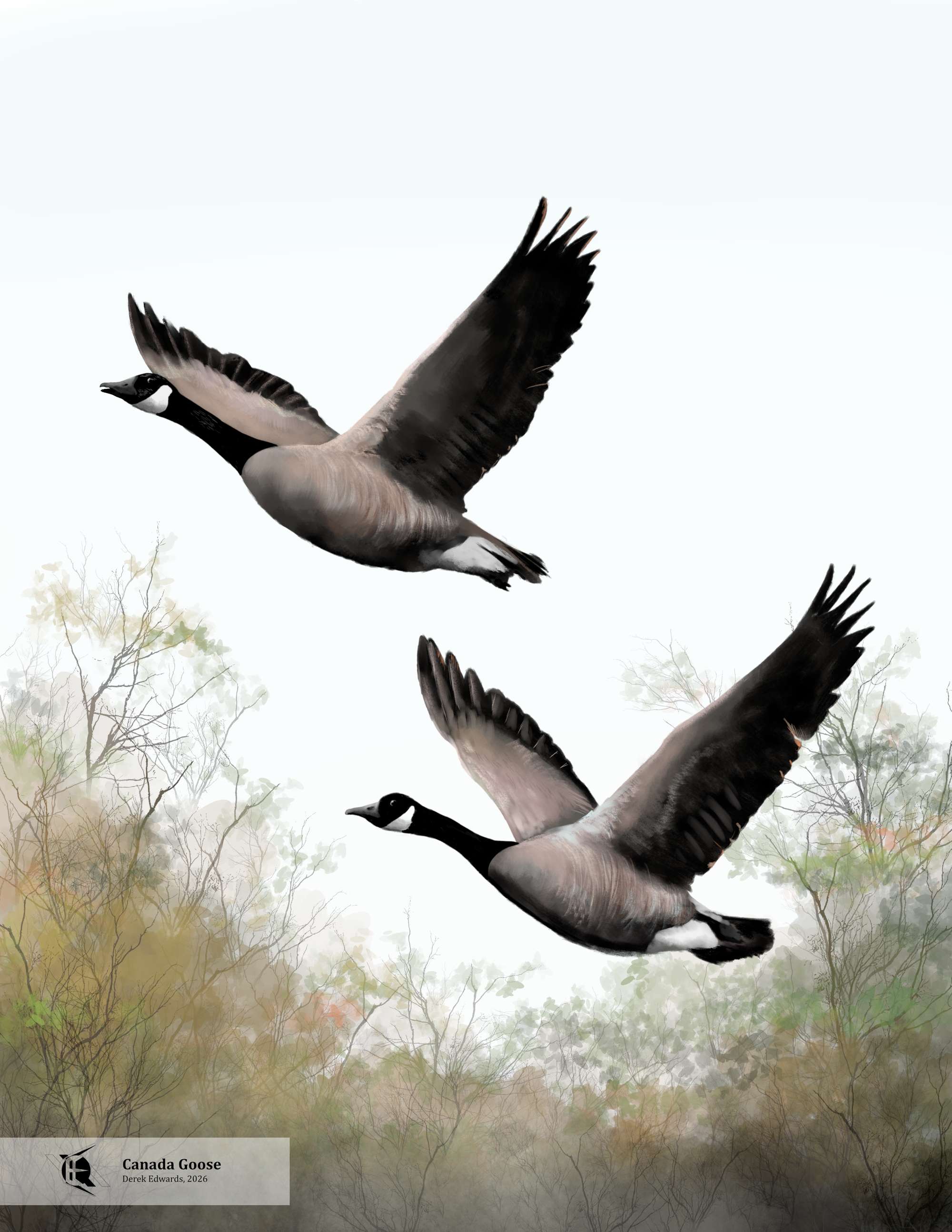
Humanity’s general love of birds has its limits. Birds such as owls and ravens have been held as portents of death and thus rendered unwelcome. Vultures have been considered the same, and even the less superstitious often consider them just plain ugly. Blackbirds and parrots attract the ire of farmers concerned with their crops being eaten only by paying customers. Shifting from the country to the city, we find the much‑maligned pigeon making a mess on once‑clean storefronts and concrete edifices. But I don’t think there’s a bird I know of that’s more widely disliked than the Canada Goose.
Canada geese are probably the bird I’ve seen the most of, by number of individuals. Maybe starlings would actually take that title, but I don’t think so. Certainly they’re my most abundantly reported species on eBird, and that’s probably true of a lot of people. They are well‑adjusted to human environments, and they are conspicuous: large, vocal, and readily identified by even the most casual birder. I don’t hate geese the way some do, but I will say they aren’t really a prize to birders; they’re too common. But they are a universal fixture of the ponds, streams, and marshes where Michigan’s best birding happens, so I can’t say I don’t have fond associations with these birds, regardless of the years that brought us to these places.
And lots of other people have felt a fondness for the Canada goose, too, to be fair. Sigurd Olson and Aldo Leopold both wrote of the Canada goose as representative of the American wilderness they worked to preserve. Olson opened a chapter of The Singing Wilderness with an anecdote about geese:
It was November and I was on top of a high, birch-covered ridge. The air was rich with the smell of down leaves and the ground was covered with bronze and tarnished gold. Far below was a blue lake with a rice-filled river flowing into it. Where the river met the open water, the rice fanned out like a golden apron, solidly colored at the gathered waist, flecked with blue toward its fringes. Suddenly out of the north came the sound I had been waiting for, a soft, melodious gabbling that swelled and died and increased in volume until all other sounds were engulfed by its clamor. Far in the blue I saw them, a long skein of dots undulating like a floating ribbon pulled toward the south by an invisible cord tied to the point of its V.1
Leopold, in an essay called “Goose Music”, wrote of how the Canada goose’s ubiquity made it especially valuable to the world, not something to be cheaply esteemed:
Last week I went to hear Sousa's band. It stood me two iron men.* They were well spent, but if I had to choose, I would forego the experience for the sight of the big gander that sailed honking into my decoys at daybreak this morning. It was bitter cold and I was all fingers, so I blithely missed him. But miss or no miss I saw him, I heard the wind whistle through his set wings as he came honking out of the gray west, and I felt him so that even now I tingle at the recollection. I doubt not that this very gander has given ten other men two dollars worth of thrills. Therefore I say he is worth at least twenty dollars to the human race. My notes tell me I have seen a thousand geese this fall. Every one of these in the course of their epic journey from the arctic man to the equivalent of twenty dollars. One flock perhaps has to the gulf, has on one occasion or another probably served with tales of high adventure. Another, passing overhead of a thrilled a score of schoolboys, and sent them scurrying home dark night, has serenaded a whole city with goose music, and awakened who knows what questionings and memories and hopes. A third perhaps has given pause to some farmer at his plough, and brought new thoughts of far lands and journeyings and peoples, where before was only drudgery barren of any thought at all. I am sure those thousand geese are paying human dividends on a value of twenty dollars each.2
But it is something John Muir once wrote about the birds, still something written out of admiration, that I think gets at why so many people dislike the Canada goose:
It was the ambition of boys to be able to shoot these wary birds. I never got but two, both of them at one so-called lucky shot. When I ran to pick them up, one of them flew away, but as the poor fellow was sorely wounded he didn't fly far. When I caught him after a short chase, he uttered a piercing cry of terror and despair, which the leader of the flock heard at a distance of about a hundred rods. They had flown off in frightened dis-order, of course, but had got into the regular harrow-shape order when the leader heard the cry, and I shall never forget how bravely he left his place at the head of the flock and hurried back screaming and struck at me in trying to save his companion. I dodged down and held my hands over my head, and thus escaped a blow of his elbows. Fortunately I had left my gun at the fence, and the life of this noble bird was spared after he had risked it in trying to save his wounded friend or neighbor or family relation. For so shy a bird boldly to attack a hunter showed wonderful sympathy and courage. This is one of my strangest hunting experiences. Never before had I regarded wild geese as dangerous, or capable of such noble self-sacrificing devotion.3
Canada geese are known to attack people. For most Americans, I’d go so far as to say that Canada geese are the wild creature they are most likely to be attacked by. Bears, snakes, cougars, and other large predators are not features of human landscapes the way geese are, so even though geese are hardly a real danger, you’re simply more likely to cross paths with them. Especially when you take one more thing into account: Olson, Leopold, and Muir wrote of the goose in part to argue for its preservation. as in their days, geese were declining. That is not the case today. Controlled hunting and habitat preservation have brought the goose back, and then some.4 Now many towns face the problem of too many geese in local parks, where they menace people, especially children, and make a mess besides, geese being large enough to leave more than the customary avian splashes of white upon the ground. Especially in nesting season, geese can interpret almost any approach as an attack, fighting against joggers as viciously as against hunters. Most birds will not do that. Not because most birds aren’t easily threatened — many are even more paranoid — but because most birds simply flee from danger. Geese will stand their ground and at least deliver a hostile hiss, and accordingly they’ve acquired a reputation as quarrelsome, ill‑tempered, swaggering bullies of the bird world. They don’t seem to know their place the way other birds do.
Olson, Leopold, and whomever else you want to throw in there can count the Canada goose as an icon of the wilderness all they want. The simple fact is that the world is not cleanly split between our part and the “wilderness” that all other living things get to share. Animals will live wherever they can, and will only avoid us insofar as we hinder them. If a Canada goose can live, find food, and raise a brood of young right alongside us, it will. So, as long as there are geese in the world and as long as people put big green lawns and ponds and riverside parks in their home environments, humans and geese will encounter each other.
So how can you best encounter Canada geese? Truly wild geese that live in more natural habitats will probably avoid you, so if you’re birding in a nature preserve or somewhere that would be described as “wilderness,” you won’t have to worry about how you approach the geese there. If you’re dealing with the resident geese in a park or some other more urban area, keep in mind that while those birds are more accustomed to people, they still consider you a potential threat, especially to their nests and young in the spring and early summer. If you are on a path, don’t directly approach them. If they get aggressive, keep your eye on them (this advice is good for blackbirds, too), act assertive, and continue around them. A big goose will weigh a bit less than twenty pounds, and most are closer to ten; they would die in any proper fight with any person bigger than a toddler, and they know it. So they’re only trying to actually attack you if they’re cornered. They’re hoping you’ll decide they aren’t worth the fight and back off. It’s tough being a goose, so a goose has to be tough.
To science, the Canada goose is Branta canadensis, or the “Canadian brant.” The brant is a closely related species of goose found in coastal marshes of Eurasia and North America, where the name shares an etymological root with “burnt,” in reference to its dark plumage.5 Until 2003, the cackling goose—an Arctic‑breeding species that looks almost exactly like the Canada goose, only smaller and shorter‑billed—was considered a subspecies of B. canadensis;6 now it is B. hutchinsii, in honor of Thomas Hutchins, a surgeon with the Hudson’s Bay Company.5 Cackling geese add a little spice to birding during migration and overwintering season in the United States, as they’ll often join Canada goose flocks. If one pays careful attention, watching for small size and listening for a squeakier honking call, one may find a cackling goose among a throng of its larger cousins. I myself have only noticed a cackling goose in the field once thus far at the time of writing, though I’ve found a few others when reviewing photographs. I’ve never heard of anyone being attacked by a cackling goose, though if you ever find yourself in Alaska or northern Canada where they nest, I’d advise you not to carelessly approach them either.
*apparently this is a term for some sort of coin.
- Olson, Sigurd. The Singing Wilderness. Knopf. 1956. p. 146
- Leopold, Aldo. “Goose Music” from A Sand Country Almanac and other writings, Library of America.
- Muir, John. “My Boyhood and Youth”, Nature Writings, Library of America. p. 75
- Renault, Marion. “America Did Too Good a Job at Saving Canada Geese.” The Atlantic, May 19, 2022. https://www.theatlantic.com/science/archive/2022/05/rochester-canada-geese-management/629916/.
- Jobling, J. A. (editor). The Key to Scientific Names in Birds of the World (S. M. Billerman et al. editors), Cornell Laboratory of Ornithology, Ithaca.
- Banks, Richard C., Carla Cicero, Jon L. Dunn, Andrew W. Kratter, Pamela C. Rasmussen, J. V. Remsen, James D. Rising, and Douglas F. Stotz. “Forty-Fifth Supplement to the American Ornithologists’ Union Check-List of North American Birds.” The Auk 121, no. 3 (July 1, 2004): 985–95. https://doi.org/10.1093/auk/121.3.985.
Curation Links
A Fatal Error | Ben Taub, The New Yorker
“After a newborn died of opioid poisoning, a new branch of pediatrics came into being. But the evidence doesn’t add up.”
Grading Is Broken | Beth McMurtrie, The Chronicle of Higher Education
“One of the report’s most compelling findings is that Harvard students almost universally speak about grades in terms of how much effort they put in. If they spend a lot of time studying and do all of the work asked of them, they believe, they should get an A. That misunderstanding is not unique to Harvard, say professors elsewhere.”
How pen caps work | David R. MacIver, Overthinking Everything
An examination of how the caps of fountain pens are rather elegantly designed to keep the tip of the nib wet. There’s more to it than just sealing the nib from the air.
Julia | Fernando Borretti
[FICTION] “I am six hundred meters in major diameter, forty meters in minor diameter. I mass nine hundred thousand tons. I have turned two hundred and forty million times. I am glass and wire. I was born and died on Earth, but I died foolishly, and for that reason my encephalon was laminated, and I was brought to the stars to be immured here. They took my language center, the Chomsky organ, so that I could not complain of my condition. I do not mind it. I can paint in aquarelle.”
See the full archive of curations on Notion
Member Commentary