
Running Commentary 3/4/2026
Hello,
I’m a day late, sorry.
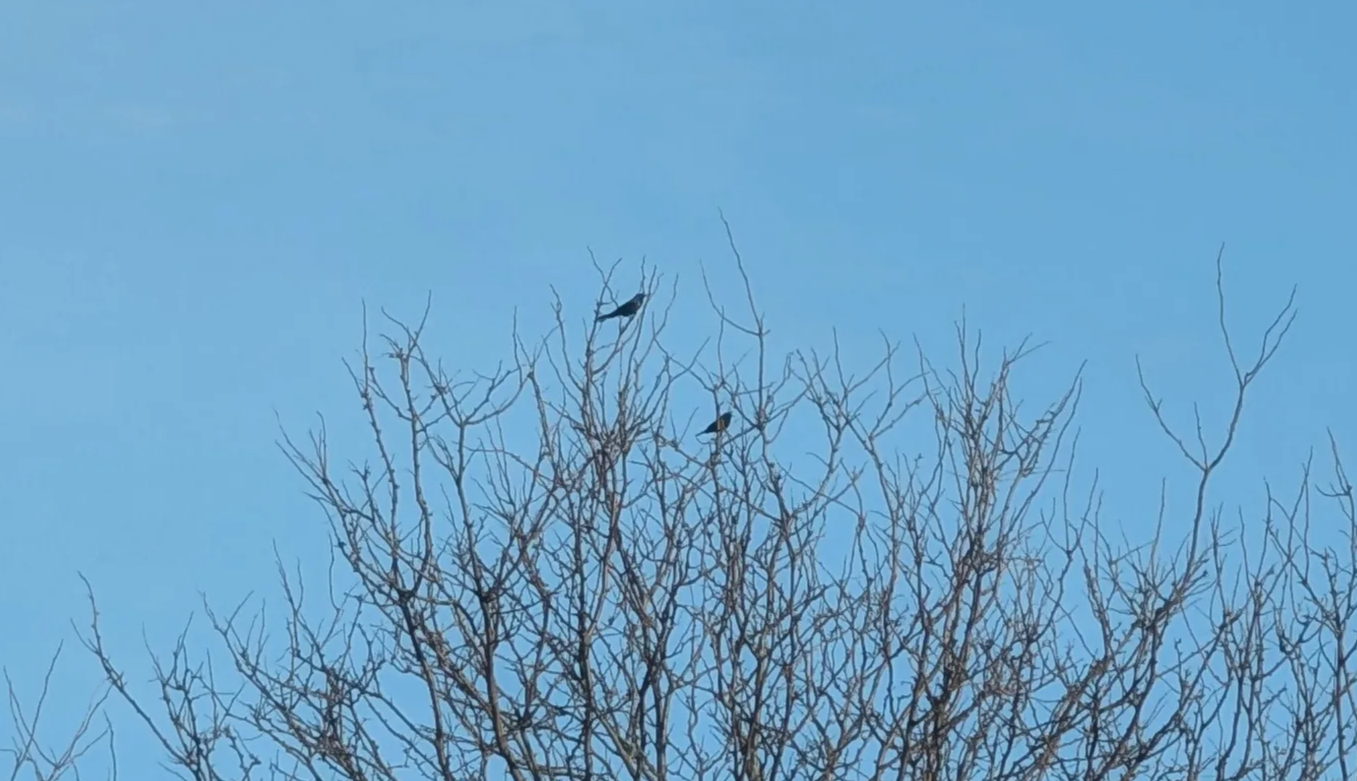
It’s March, now, and spring is coming. I know this because I found the first grackle and first red-winged blackbird of the year both together in the same tree the other day.
Anyway...
Watching...
Paradise
Mayday
- A relatively short episode for this series.
- It was nice to get some flashbacks to show how Xavier and Teri met. In the first season we followed Xavier but Teri was usually offscreen, presumed dead, someone who existed in Xavier’s backstory but not really in the show. Of course, she’s still backstory here, but we do get to know her better, which helps us care more about her getting found.
Another Day in Paradise
- We're back underground this episode to follow up on the rest of Season 1’s finale. The situation in Paradise seems still quite in Sinatra's hands, though there's a lot less peace in the town.
- We get some flashbacks that show two key things: the worst of the natural disasters are apparently yet to come, ultimately destroying everything on Earth, including Paradise, if we’re to believe the curly-haired scientist; and Sinatra had a man killed to gain control of his quantum entanglement technology. Time travel has not been mentioned, as yet, but quantum entanglement and a couple other things all point in that direction. Or, actually, I kind of doubt Sinatra has a time machine, as traditionally portrayed in science fiction. I think, rather, she’s hoping to communicate with the past to try to prevent the disasters from happening. The Peripheral worked that way; quantumly entangled particles probably can’t physically move a person through time but they could be used to transmit information through time.
- The scientist’s wife is named “Alex”, which is the name of the person Geiger and Linc mentioned seeking in the bunker to kill. Might her death have been faked to save her from Billy?
- Not sure what’s going on in the prison, maybe something to do with the quantum entanglement. Jeremy got himself sent there deliberately, so he must figure there’s something important down there.
- Henry Baines is the best depiction of an ordinary American politician since the mayor from Jaws.
A Holy Charge
- There’s a very limited number of episodes this season, so we don’t want to spend too much time just wandering around the post-apocalypse. Still, I think that the world as it is has been shown well here. It feels very real.
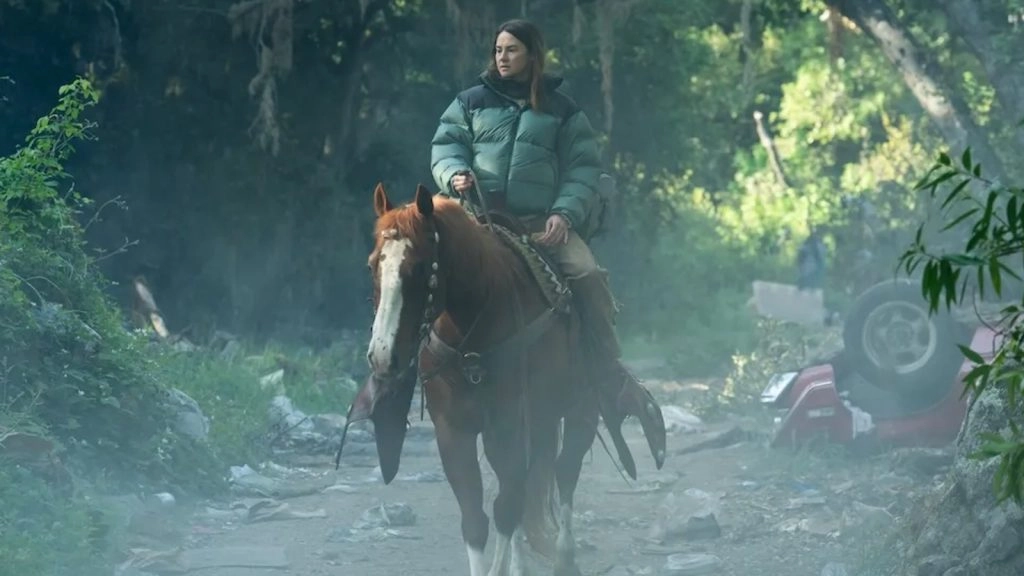
- Annie’s death was somewhat telegraphed this episode but the storytelling kept us holding out hope for her regardless. Shailene Woodley did an incredible bit of acting as her character died.
- The fact that Annie has died won’t keep her from featuring in a show with this many flashbacks.
Bird of the Week
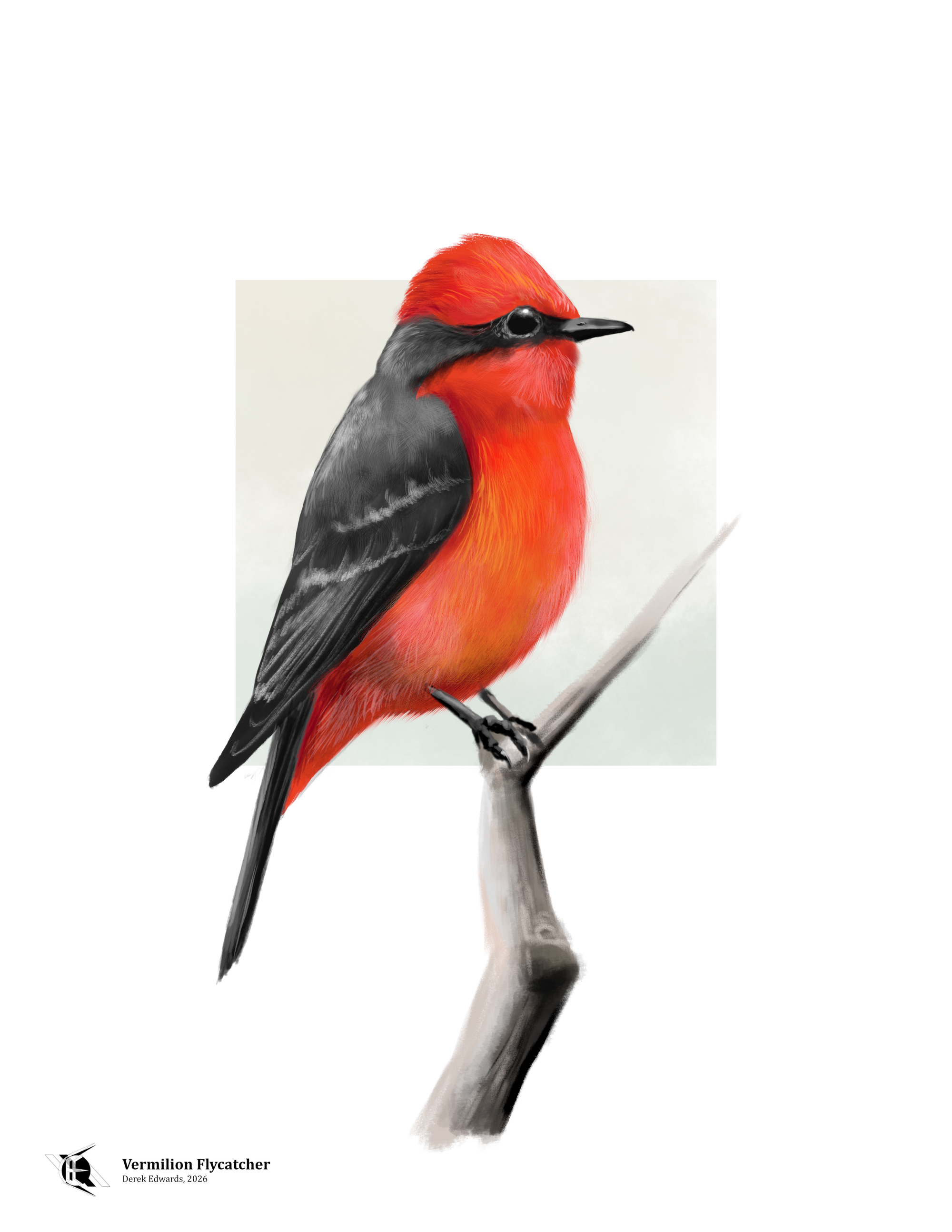
As I’ve mentioned before, the tyrant-flycatchers are the largest family of birds in the Americas, hundreds of species strong. Just in the United States there are a few dozen of them; many of our flycatchers are so similar in appearance that specialized field guides exist just to teach the subtle differences of bill length, song, and “gestures” needed to tell them apart.1 A few are more recognizable, some are downright eye‑catching, but this often comes at the price of looking less classically like a flycatcher. One bird, however, manages to have it all, being unmistakably a flycatcher, obviously a specific flycatcher, and obviously this flycatcher: the vermilion flycatcher.
Breeding in open country in the U.S. Southwest and down through Latin America, the vermilion flycatcher looks and acts much like most other tyrannids found in North America, except that rather than being shades of gray, the male is dark gray accented with a very bright red. “Vermilion” is a word that tends to trip people up; it doesn’t seem like it ought to be a shade of red, starting with ver‑ as it does. Vermont, verdant, salsa verde — all these terms derive from a Latin word for something green. As I mentioned back when I drew the vermilion cardinal, the word vermilion comes from the Latin word for “worm,” which is also, via Norman French, the root of the English word vermin, which has come to refer to any number of unlovely creatures, not just little red earthworms.2 When writing about the color, I mentioned how, in the ancient world, vermilion in the form of the mineral cinnabar was expensive, and wealthy Romans would show off their status by decorating with it. The color became more accessible in the Middle Ages and was fairly common by the opening of the modern era.
Vermilion’s color in cinnabar was the result of a pigment called mercury sulfide (HgS). This occurs partly in nature, but it is also easily synthesized from sulfur and mercury, which medieval alchemists were quite familiar with. Mercury sulfide was thought to perhaps lie somewhere along the general path toward alchemically producing gold, due to its red color. That actually brings up something else interesting about the history of color: while today we tend to think of gold as a metallic form of yellow, in earlier periods one might just as easily say gold was red—or orange, though they hadn’t adopted that word yet. That’s why very orange icterids are called orioles, from the Latin aurum for gold. Anyway, those alchemists didn’t really want to publish their findings, as vermilion was just a byproduct of their real aim of limitless gold, something that had to be kept a closely guarded secret lest everyone be able to make limitless gold, thus making gold too cheap to make a successful alchemist rich. Eventually though, that path to alchemical gold went nowhere; and being able to cheaply produce precious vermilion became an end unto itself. By the Renaissance, vermilion pigments had become widely used.3 Da Vinci used it in his Salvator Mundi, a depiction of Christ that features no vivid red in its composition; da Vinci had mixed it in a blend with other pigments to make a warm brown—something that, in Christ’s day, would have been a shameful waste of a red more precious than gold.4
To science, the vermilion flycatcher is Pyrocephalus rubinus, the “flaming‑headed ruby,”5 which is certainly a fitting name, even if the red of a ruby is due to chromium impurities in aluminum oxide, not the mercury sulfide referenced in its common name.6 Both common and scientific names are only really apt for the male of the species; female vermilion flycatchers are not blazing red, though they do still show more color than many flycatchers, being pinkish to salmon‑colored on their flanks and belly.
- Grueskin, Zoe. “Yes, You Can Identify Flycatchers. These New Field Guides Are Sure of It.” Audubon, July 5, 2025. https://www.audubon.org/magazine/yes-you-can-identify-flycatchers-these-new-field-guides-are-sure-it.
- Merriam-Webster Dictionary, s.v. “vermin,” accessed February 28, 2026, https://www.merriam-webster.com/dictionary/vermin.
- St Clair, Kassia. (2018b). The Secret Lives of Colour. John Murray. pp.145-146
- Rieppi, Nica Gutman, Beth A. Price, Ken Sutherland, Andrew P. Lins, Richard Newman, Peng Wang, Ting Wang, and Thomas J. Tague. “Salvator Mundi: An Investigation of the Painting’s Materials and Techniques.” Heritage Science 8, no. 1 (April 20, 2020). https://doi.org/10.1186/s40494-020-00382-3.
- Jobling, J. A. (editor). The Key to Scientific Names in Birds of the World (S. M. Billerman et al. editors), Cornell Laboratory of Ornithology, Ithaca.
- Gemological Institute of America. “Ruby Description,” n.d. https://www.gia.edu/ruby-description.
Curation Links
On Tilt | Jasper Craven, Harper's Magazine
An personal look at the increasingly popular world of betting and gambling apps, written by someone a bit concerned how prone he is to play and how stacked the deck, as it were, the present state of things is against players.
Ten thoughts on sports betting | Matt Glassman, Matt's Five Points
A more detached look at the increasingly popular world of betting and gambling apps. Glassman admits that different sorts of gambling are different enough to be regarded differently, with slot machines representing the worst case scenario and other forms gaining points for how much they differ from this by being more skill-based, more social, or slower paced.
Why do office chairs have 5 legs? | Emily Zhang, Rabbit Hole
[VIDEO] The rolling swivel office chair, with very few exceptions, features five wheels set on struts from the central support post. This inaugural video of a promising new channel looks into why 5 in a world of mainly 4-legged chairs. (20 minutes)
She Who Remembers | Jesmyn Ward, The Atlantic
[FICTION] "People crowd the streets. White men wearing floppy hats coax horses down rutted roads turned to shell-lined avenues. White women with their heads covered usher children below awnings and through tall, ornate doorways. And everywhere, us stolen. Some in rope and chains. Some walking in clusters together, sacks on their backs or on their heads. Some stand in lines at the edge of the road, all dressed in the same rough clothing: long, dark dresses and white aprons, and dark suits and hats for the men, but I know they are bound by the white men, accented with gold and guns, who watch them. I know they are bound by the way they stand all in a row, not talking to one another, fresh cuts marking their hands and necks. I know they are bound by the way they wear their sorrow, by the way they look over an invisible horizon into their ruin.”
See the full archive of curations on Notion




Member Commentary